

English Version
Español


New & used books - Amateur Writers at www.elsonambulo.com
 
     
1914   Julio Florencio Cortázar is born, son of Julio Cortázar and María Herminia Descotte. Years after he would declare: "My birth (in Brussels) was the product of tourism and diplomacy".. At that time Brussels was occupied by the Germans
1916 The Cortázar family settles in Switzerland, were they wait for the end of the First World War.
1918 Return to Argentina. The family settles in Banfield, a suburb of Buenos Aires. The father (from whom Julio would never want to hear again) abandons his wife and two children. Julio is raised by his mother, an aunt, his grandmother and his sister Ofelia, a year younger.
"He never did anything for us" is what he will say about his father. Frequent illnesses, broken arms, asthma, first loves. The short story Los venenos is very autobiographic.
1923 First literary exercises. "I finished my first novel when I was nine years old", he will say. He also writes poems. His family suspects they are copied from someone else, this fact produces great distress on him.
1928 He starts attending the Normal School for teachers Mariano Acosta (whose atmosphere he will recreate in the short story La escuela de noche, which he describes as awful, one of the worst schools one can imagine. He mentions two of the teachers: Arturo Marasso and Vicente Fattone.
1932 He obtains his Normal Teacher Diploma, which allows him to teach at schools. That same year he tries to travel to Europe in a cargo boat with a group of friends, but he does not achieve his purpose. We can find this failure in his short story Lugar llamado Kindberg . "Buenos Aires was some kind of punishment. To live there was like being in prison" is what he will declare later in an interview with Luis Harss.
1932 He finds Jean Cocteau´s book Opio in a bookstore in Buenos Aires. It's reading changes "completely" his vision of literature and leads him through the discovery of surrealism.
1935 He obtains his Diploma of Normal Teacher with a grade in Literature and he enters the Faculty of Philosophy and Literature. He approves his first year. But since at home "there was little money and I wanted to help my mother" he abandons his studies to start teaching.
1937 He is appointed teacher at the National School of Bolivar, a small town in the province of Buenos Aires. He reads all the time and he writes short stories that he doesn't publish.
1938 He publishes his first poems under the title of Presencia and using Julio Denis as a pseudonym. About them he will say they were some very "mallarmeans" sonnets and that "happily the book has been forgotten"..
1939 In July his is moved to the Normal School of Chivilcoy.
1941 Always under the pseudonym of Julio Denis he publishes an article on Rimbaud in the review Huella , which together with the review Canto were important vehicles of expression for the young writers.
1944 He moves to Cuyo, Mendoza where he teaches French Literature at the University. He publishes his first short story: Bruja in the review Correo Literario. He takes parts in meetings against the movement that supports General Perón (peronismo).
1945 When Juan Domingo Perón wins the presidential elections he renounces. "I'd rather renounce than turn around as so many colleagues did to keep their jobs. He gathers his first volume of short stories under the title La otra orilla . He returns to Buenos Aires, where he starts to work in the Argentinean Book Chamber.
1946 He publishes the short story Casa tomada in the review Los Anales de Buenos Aires, whose director is Jorge Luis Borges. That same year he publishes an essay about the English poet John Keats La urna griega en la poesía de John Keats in the of Cuyo University ´s Revista de Estudios Clásicos .
1947 He collaborates with several reviews such as Realidad. He publishes an important theoretical research: Teoría del Túnel and his short story Bestiario appears in the review Los Anales de Buenos Aires.
1948 After taking only nine month of a course that should have lasted at least three years, he obtains his title as Public Translator for English and French. This great effort turns into neurotic symptoms, one of them (the searching of roaches in his food) will disappear with the writing of the short story Circe, which together with Casa Tomada and Bestiario , which had already appeared in Los anales de Buenos Aires, shall be included in Bestiario .
1949 He publishes the dramatic poem Los Reyes, first work to be published under his own name. It was ignored by the critics. During the summer he writes his first novel Divertimento which in some way prefigures Rayuela. Divertimento will be published only in 1986 after his death. He collaborates with cultural reviews in Buenos Aires (Cabalgata, Realidad y Sur).
1950 He writes another novel, El exámen which is rejected by the literature adviser of Losada publishers, Guillermo de Torre. Cortázar will present it to a contest called by the same publishers and once again he doesn't have any luck. This novel will also be published after the author's death in 1986.
1951 His first volume of short stories Bestiario is published by Sudamericana, where some of the masterpieces of the gender already have been published. The book does not have any impact, but for a small group of readers. He obtains a scholarship from the French Government and he travels to Paris with the intention of settling there. He starts working as translator for the UNESCO.
1952 The short story Axolotl appears in Buenos Aires Literaria
1953 He marries Aurora Bernárdez, Argentinean translator.
1954 Trip to Montevideo, were the UNESCO General Conference takes place that year. He goes there as translator and revisor. He stays at the Hotel Cervantes (where Jorge Luis Borges had already stayed) there is were the short story La puerta condenada takes place. He takes long walks around the town and he visits "El Cerro", the suburb from which "La Maga" will come.
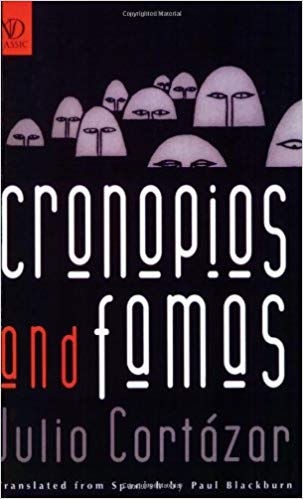
He continues to work for UNESCO as an independent translator. He goes on writing what will later on be Historias de cronopios y de famas, which he had begun the year 1951: Years after he would say that "One night, listening to a concert at "Les Champs Elysées" I suddenly had the feeling of these characters that would be called the "cronopios". Buenos Aires Literaria publishes Torito. He travels to Italy, were he starts translating Edgar Allan Poe's short stories.
1956 He publishes the volume of short stories Final del juego in Mexico Los Presentes Publishers, this volume includes the story Los venenos which he considers "autobiographic". So is the story that bears the title of the book. He also publishes the translation of Poe's Work in prose at the University of Puerto Rico.
1959 He publishes Las armas secretas which includes the short story called El perseguidor. This story implies a change in Cortázar's prose. "It was an illumination. I finished reading that article (one that announced the death of Charlie Parker) and then the next day, or maybe that same day, I don't recall, I started the story, because I immediately knew he was the character (.....) it was what I had been looking for". Cortázar says that here he is facing an existential question, a humane problem, which he would expand afterwards in Los Premios and most of all in Rayuela (Los Nuestros, Luis Harss)
1960 He travels to the United States of America (Washington and N.Y.) and publishes the novel Los Premios which he wrote"just to have fun" during that long journey on a ship.
1961 He visits Cuba for the first time. This visit will show him "the great political void I had , my political uselessness. Since then I have tried to get informed, to understand, to read". That same year Fayard publishes Los Premios, first translation of a work of Cortázar.
1962  He publishes Historias de cronopios y de famas in Minotauro, Buenos Aires.
1963


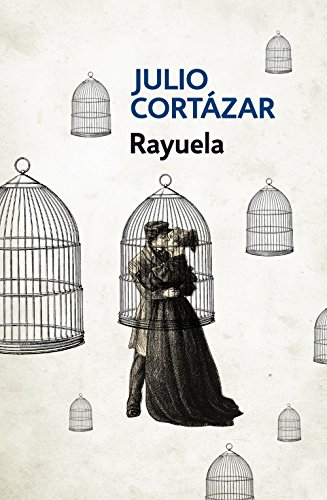
He publishes Rayuela (Sudamericana Publishers), 5000 copies were sold the first year. He said: "I wrote long passages of Rayuela without any idea of where they were going to be situated or what was their reason (....) In some way I was inventing at the same time I was writing, never going ahead of what I could see at that very moment". (In Omar Prego´s "Julio Cortázar - La fascinación de las palabras, ) He publishes Una flor amarilla in Revista de Occidente, Madrid and Descripción de un Combate en Eco contemporáneo. That same year he is a member of the jury of the Prize Casa de las Américas in Havana, Cuba.
1965

Pantheon,N.Y. publishes the english translation of Los Premios" and Luchterhand, Geschichten der Cronopien und Famen.
The story Reunión appears in El Escarabajo de Oro, Buenos Aires and so does Instrucciones para John Howell in Marcha at Montevideo (Uruguay).

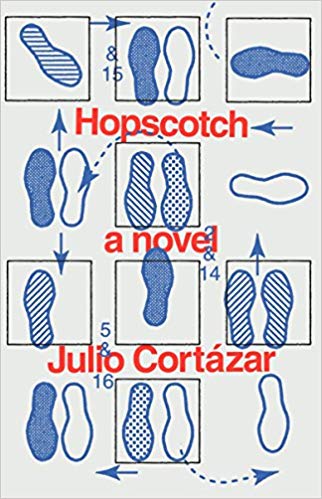
1966 He publishes the volume of stories Todos los fuegos el fuego in Sudamericana, Buenos Aires. In New York Pantheon publishes the English translation of Rayuela and Gallimard publishes the French translation, by Laure Guille-Bataillon.The article Para llegar a Lezama Lima is published in the review Unión, Havana. He decides to assume his commitment to the struggle for liberation of Latin America.
1967 La vuelta al día en ochenta mundos, this book gathers short stories, chronicles, essays and poems. The composition, which is very original, was mostly conceived by Julio Silva. According to Cortázar the book was imagined as an homage to Jules Verne, "but in a very indirect way".
1968 He publishes the novel62, Modelo para armar in Buenos Aires. This novel is received with some astonishment by the critics. Cortázar had said that he would have liked " to be able to write this story showing how those figures are a brake and a denial to individual reality, many times without the characters having any awareness of the fact". That same year he publishes in Buenos Aires the book Buenos Aires, Buenos Aires" with pictures of Sara Facio and Alicia D'Amico.
1968 He publishes another of his "almanac" books: Último Round , where he gathers essays, short stories, poems, chronicles and humorous texts. La edición (by Siglo XXI, Mexico) is conceived as a two floors building and has plenty of illustrations. The book includes (in the first floor) a long letter written in Saigon on May 10, 1967 by Cortázar to Roberto Fernández Retamar, which was published in the Review of Casa de las Américas. "This letter is included here as a document, due to the fact that Latin American dictatorships would not allow it to reach the Latin-American public". The letter's subject was the situation of the Latin American intellectuals. Pantheon, New York publishes the English translation of Historias de cronopios y de famas and Einaudi (Torino, Italy) publishes that of Rayuela".
1969  Ultimo round.
1970 He travels to Chile invited to the assumption of President Salvador Allende, he goes with his second wife, Ugne Karvelis. Sudamericana publishes the volume "Relatos" were a selection of stories from "Bestiario", "Final del Juego", "Las armas secretas" and "Todos los fuegos el fuego" is included.
1971 He publishes "Pameos y Meopas" (Barcelona, Ocnos) includind poems written between 1944 and 1958.
1972 He publishes "Prosa del observatorio" in Lumen, Barcelona with pictures taken by Julio Cortázar and the aid of Antonio Galvez.
1973 "Libro de Manuel" is published in Buenos Aires by Sudamericana. He receives the "Medici Award"in Paris for this book. Cortázar travels to Buenos Aires to present the book. On his way he visits Peru, Ecuador and Chile. The novel makes great impact: in the prologue he wrote: "...if during so many years I have written texts linked to Latin American problems, as well as novels and stories in which these problems were absent or could be merely seen, now and here the waters have come together, but harmonising them has not been something easy to do, as it may be noticed in the confused and tormented itinerary of some character". Tusquets publishes in Barcelona "La casilla de los Morelli", whose edition, prologue and notes were done by Julio Ortega.
1974 Sudamericana publishes the short story volume "Octaedro". In April he takes part in a reunion of the Russell Court II which took place in Rome to examine the political situation in Latin America, particularly the violations of human rights.
1975 He visits the United States invited by the University of Oklahoma and he also goes to Mexico City to take part on the third session of the International Investigation Commission of the crimes of the military Junta (board) in Chile. There he will give a cycle of lectures about Latin American literature and his own work. These lectures together with two other texts of his were gathered in the volume "The final Island: The fiction of Julio Cortázar" (1978) , which is a first critical approach in english to his work. He publishes the comic: "Fantomas contra los vampiros multinacionales" (Mexico, Excelsior). He publishes "Silvalandia" in Mexico by Cultural GDA, a series of texts inspired by some of Julio Silva's paintings.
1976 He makes a clandestine visit to the Isle of Solentiname in Nicaragua. He publishes "Estrictamente no profesional. Humanario" in la Azotea, B.A. Based on works of Sara Facio and Alicia D'Amico.
1977 "Alguien anda por ahí" by Alfaguara, Madrid. Which includes the text "Apocalipsis en Solentiname" .
1978 Pantheon, N.Y. publishes the English version of "Libro de Manuel" .Here Cortázar warns the American readers: "This books was finished in 1972, year in which Argentina was under the dictatorship of General Alejandro Lanusse and at that time the growth of violence and human rights' violation was evident. Such abuses have continued and even enlarged under the military Junta of General Videla(.....) the references to Argentina and other Latin American countries today are as valid as when the book was written". He publishes "Territorios", texts related to Mexican painting (Mexico, Siglo XII).
1979 He publishes "Un tal Lucas" in Alfaguara, Madrid. In October he visits Nicaragua and since then he devotes to back and serve the Sandinist Revolution. Some of his texts are used in the country's literacy campaign. He divorces Ugné Karvelis, with whom he will continue to be good friends. He travels with Carol Dunlop, his third wife, to Panama, were he meets Omar Torrijos, Panamanian ruler.
1980 He publishes the short story book "Queremos tanto a Glenda", Mexico, Nueva Imagen. He gives a series of lectures at the University of Berkeley, California.
1981 By one of its first decrees the socialist government of Francois Mitterand concedes him the French nationality on June 24th. Due to health problems he is taken to the hospital, and he is diagnosed leukaemia. His project to visit Cuba, Nicaragua and Puerto Rico in December must be suspended.
1982 He publishes a new volume of poems "Deshoras", Mexico, Nueva Imagen. His wife Carol Dunlop passes away in November.
1983 He publishes "Los autonautas de la cosmopista", this book was written together with Carol Dunlop in a thirty three day trip from Paris to Marseilles, stopping at two parking stations a day. He hands over the copyright to the Nicaraguan Sandinist government. He travels to Havana, Cuba to attend a meeting of "The Permanent Committee of Intellectuals for the Sovereignty of Our America" He travels to Buenos Aires between November 30th and December 4th to visit his mother after the fall of the dictatorship when the assumption of President Raúl Alfonsín was taking place. The authorities ignore his presence, but he is warmly received by the people, who recognises him in the streets. "Nicaragua, tan violentamente dulce" is published in Managua by Nueva Nicaragua Publishers.
1984

He travels to Nicaragua where he receives the "Order of Cultural Independence", Ruben Dario from the Nicaraguan Minister of Culture, Ernesto Cardenal.
February 14th : he dies of leukaemia and he is buried at the Cemetery of Montparnasse in the same tomb were Carol Dunlop rests. His volume of poems "Salvo el Crepúsculo" appears in Mexico.

1986 Alfaguara Publishers started the edition of his complete works, even those that had remained unpublished up to his death. The collection "Biblioteca Cortázar" was created for this purpose. The designs of the covers were done by Julio Silva.
Based on "La fascinación de las palabras" by Omar Prego Gadea - Julio Cortázar. Alfaguara © - 1997
Special Thanks to Pamela Palma, who translated it from spanish
BIBLIOGRAPHY